When I traveled to the occupied West Bank in 2016, I did not expect to find myself confronted by something so deeply familiar. I had lived through the 1990 Siege of Kanehsatà:ke, where Canadian soldiers surrounded my community after Mohawk people defended their territory against the expansion of a golf course onto ancestral burial grounds.
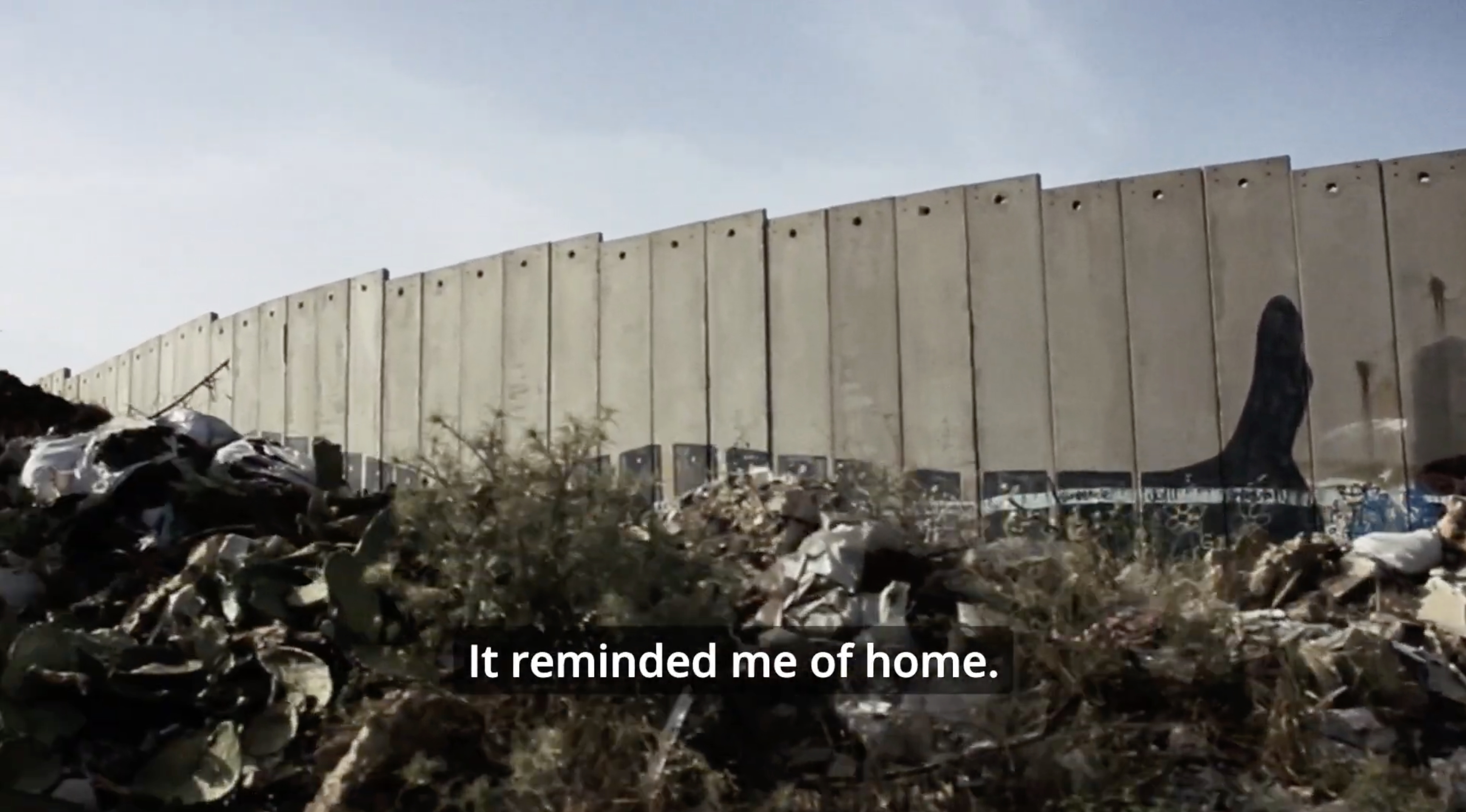
I had spent decades documenting Indigenous resistance to pipelines, fracking, and land theft across Turtle Island. Yet as I crossed israeli military checkpoints, watched concrete walls divide Palestinian communities, and witnessed settlers expanding onto Palestinian land, I recognized patterns he had seen his entire life.
The geography had changed. The language had changed. The uniforms had changed. But the underlying logic remained strikingly recognizable.
This moment became the foundation of Red Road to Palestine, a documentary by Amplifier Films that asks a simple but profoundly unsettling question:
What happens when Indigenous peoples from different parts of the world begin recognizing one another’s colonial experiences?
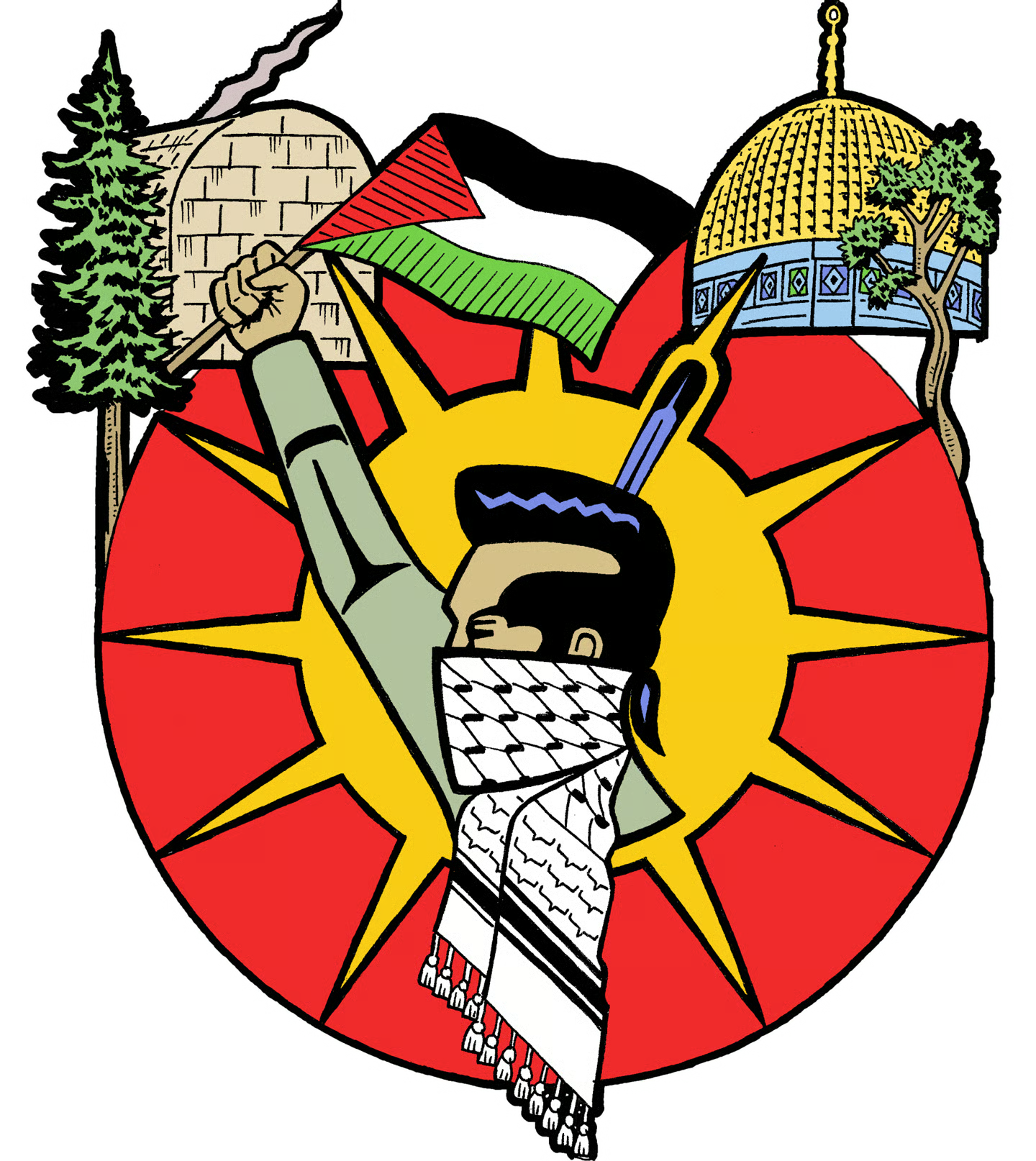
The film does not argue that Palestine and the Americas are identical histories. They are not. The colonization of the Americas began more than five centuries ago, while Zionist settlement in Palestine developed under very different historical conditions. Indigenous nations across Turtle Island represent hundreds of distinct peoples with unique political traditions, while Palestinians constitute a different national and historical community.
Yet despite these differences, many Indigenous scholars and activists have observed that both peoples confront recurring structures characteristic of settler colonialism: land acquisition, territorial fragmentation, displacement, legal systems that privilege settlers, militarized enforcement, and ongoing resistance. It is these recurring structures — not identical histories — that form the heart of this comparison.
*
Colonialism as a structure
Historian Patrick Wolfe famously argued that settler colonialism is ‘a structure, not an not an event’. His observation, derived from Indigenous experience, fundamentally changed how many scholars understand colonial societies. Traditional histories often describe colonization as something that happened long ago: European ships arrived, Indigenous land was conquered, treaties were signed, and eventually modern nation-states emerged.
Settler colonial theory challenges this narrative. Instead, it argues that settler colonialism continues as long as the political, legal, and economic systems created through dispossession remain in place.
This understanding transforms how we see settler countries like Canada and the United States. Their colonial histories are not simply chapters in the past. The legal systems governing Indigenous lands, extractive industries operating on Indigenous territories, reserve systems, policing, and disputes over sovereignty all demonstrate that colonial relationships remain active.
Many Palestinians describe their own circumstances similarly—not as the aftermath of a past conflict but as an ongoing reality shaped by occupation, settlement expansion, movement restrictions, and disputes over land and sovereignty.
For Indigenous visitors like myself, this continuity makes Palestine immediately legible. Not because the places are identical. Because colonial structures often operate through recognizable patterns.
*
The centrality of land
Land occupies a unique place within both Indigenous and Palestinian worldviews. For many Indigenous nations, land is not property in the European legal sense. It is the basis of language, governance, ceremony, kinship, and identity. Dispossession therefore represents not merely economic loss but disruption of relationships that define a people.
Similarly, Palestinian writers, artists, and historians frequently describe land as inseparable from memory, family history, agriculture, and cultural continuity. Olive groves, villages, orchards, and agricultural traditions become repositories of identity rather than simply productive landscapes.
In both contexts, removing people from land reshapes far more than geography. It transforms culture itself. This helps to explain why land struggles remain emotionally and politically central generations after initial displacement.[1]


*
Fragmentation as governance
Another recurring feature of settler colonial systems is fragmentation. Throughout the Americas, Indigenous nations were confined to reserves or reservations, often isolated from traditional territories and from one another. Colonial governments imposed administrative boundaries that disrupted older political relationships.
In the occupied West Bank, Palestinian communities exist within a patchwork of areas separated by checkpoints, settlements, restricted roads, military zones, and administrative divisions.[2]
Again, these systems differ legally and historically. Yet both demonstrate how colonial governance frequently operates by reorganizing Indigenous space in ways that limit mobility, weaken collective political power, and facilitate settler expansion. Fragmentation becomes a governing technique.
*
Memory against erasure
Colonial projects rarely depend solely upon military power. They also reshape historical narratives. Throughout North America, Indigenous histories were often rewritten to portray Native peoples as vanished, defeated, or belonging exclusively to the past. School systems, museums, and popular culture frequently reinforced these narratives while minimizing Indigenous political survival.
Palestinians similarly confront competing historical narratives concerning belonging, indigeneity, displacement, and state formation.
In both contexts, history itself becomes contested territory. Documentary filmmaking therefore assumes unusual significance. Films preserve testimony. They challenge official narratives. They create archives that future generations inherit.
For me and Franklin López at Amplifer, filmmaking becomes more than artistic practice. It becomes a form of historical intervention, documenting experiences often marginalized within dominant media. Their collaboration reflects a shared commitment to using film to connect Indigenous struggles across continents and to examine colonialism as an ongoing system rather than a closed chapter of history.
*
Learning across struggles
One of the most compelling aspects of Red Road to Palestine is that it is not primarily a film about comparison. It is a film about encounter. When Indigenous people visit Palestine, or Palestinians visit Indigenous communities in Turtle Island, they are not merely exchanging political analyses. They are sharing lived experience.
Questions emerge naturally. How do communities preserve language under colonial rule? How do they defend land? How do they maintain ceremony? How do they raise children[3] while living inside systems designed to eliminate Indigenous futures?

These conversations do not erase difference. They generate solidarity through mutual recognition and bring hope beyond victimhood.
Discussions of colonialism often emphasize suffering. Certainly, both Indigenous nations and Palestinians have endured profound violence, displacement, and loss. Yet Red Road to Palestine deliberately refuses to end there.
Its central theme is resistance. Indigenous peoples still govern. Languages continue to be revitalized. Land defense movements continue. Palestinian artists continue creating. Farmers continue cultivating. Families continue returning to villages whenever possible. Communities continue imagining futures beyond colonial rule.
Resistance becomes not merely opposition but affirmation. It insists that Indigenous peoples remain active political communities rather than historical relics.[4]
*
Toward a shared future
Some observers worry that comparisons between Palestine and Indigenous North America oversimplify history. That concern deserves serious consideration.
Responsible comparison requires acknowledging distinct historical trajectories, legal contexts, and political realities. Yet refusing comparison altogether also carries risks. Colonial systems have long learned from one another. Legal doctrines, policing methods, surveillance technologies, resource extraction models, and settlement practices have circulated globally for centuries. Studying these connections helps to illuminate broader patterns rather than reduce individual histories.
Likewise, solidarity does not require sameness. People confronting different manifestations of colonialism can still recognize shared questions about land, sovereignty, memory, and justice.
Perhaps the most important intervention of Red Road to Palestine lies not in proving historical parallels but in creating relationships. Relationships between Mohawk communities and Palestinians. Between Indigenous filmmakers. Between activists. Between audiences willing to rethink colonialism as something ongoing rather than completed.
For Franklin López, whose political consciousness was shaped by growing up in Puerto Rico — a territory that remains under U.S. sovereignty — this project also reflects a broader exploration of colonialism across different geographies. Red Road to Palestine connects distinct experiences without collapsing their differences, using cinema as a space for dialogue, historical inquiry, and solidarity.
The film ultimately asks viewers to reconsider one of the most enduring myths of modern history: that colonialism belongs to the past. For millions of Indigenous people — and for millions of Palestinians — it does not. It remains an organizing structure of everyday life.
Recognizing that reality does not diminish the uniqueness of any struggle. Instead, it opens the possibility that people separated by oceans, languages, and histories may nevertheless recognize one another—not because their stories are identical but because they understand what it means to defend land, memory, and dignity against systems that seek to erase them.
Clifton Ariwakehte Nicholas is a Kanien’kehá:ka activist, filmmaker, and entrepreneur from Kanesatake. Clifton has been on the frontlines of Indigenous resistance to settler-colonial siege, land theft, and resource plunder. His independent films have documented Mi’kmaq resistance to fracking in Elsipogtog: No Fracking Way! (2014) and exposed the dangers of the Énergie Est pipeline project in Karistatsi Onienre: The Iron Snake (2014). Stay tuned for Red Road to Palestine with Franklin López and Rehab Nazzal at Amplifier Films, in production for 2027.
[1] Editor’s note: for Clifton’s discussion of a Right of Return in Turtle Island, see Anarcho-Indigenism: Conversations on Land and Freedom, ed. Francis Depuis-Déri and Benjamin Pillet (London: Pluto Press, 2019), 74.
[2] On fragmentation as governance in the occupied West Bank, see Mark Griffiths, Checkpoint 300: Colonial Space in Palestine (Minneapolis: University of Minnesota Press, 2025) and Jemima Repo, ‘Checkpoints, the Sexual Division of Labour, and Social Reproduction in the West Bank’, in Making Death and Life in Palestine: Social Reproduction in Settler Colonialism, ed. Tithi Bhattacharya and Susan Ferguson (London: Pluto Books, 2025), 95-106
[3] Editor’s note: Occupation forces killed thirty-five Palestinian children in 2016, the year Clifton visited the West Bank. This included ten-year-old Muhyee al-Din Tabakhi, shot in the chest by a sponge round (shown above). By the time israel issued its new, heavier, more lethal sponge-tipped munition in 2015, its predecessor has already been used to kill sixteen-year-old Muhammad Abdelmajib Sunukrut, shot in the head by a sponge round in August 2014. A decade of impunity has since enabled the escalation of israel’s child genocide, with the U.N. reporting the israeli military’s ‘deliberate’ killing of over 20,179 children since October 2023. This figure does not account for the thousands of children who remain buried under rubble, nor the scale of so-called ‘indirect’ killing caused by israel’s total infrastructural war on Gaza, which medical researcher say could be ‘3 to fifteen times the number of direct deaths’.
[4] Gord Hill, 500 Years of Indigenous Resistance (Oakland: PM Press, 2009).