Siege worlds: From Palestine to the Penobscot and (land) back
Editorial
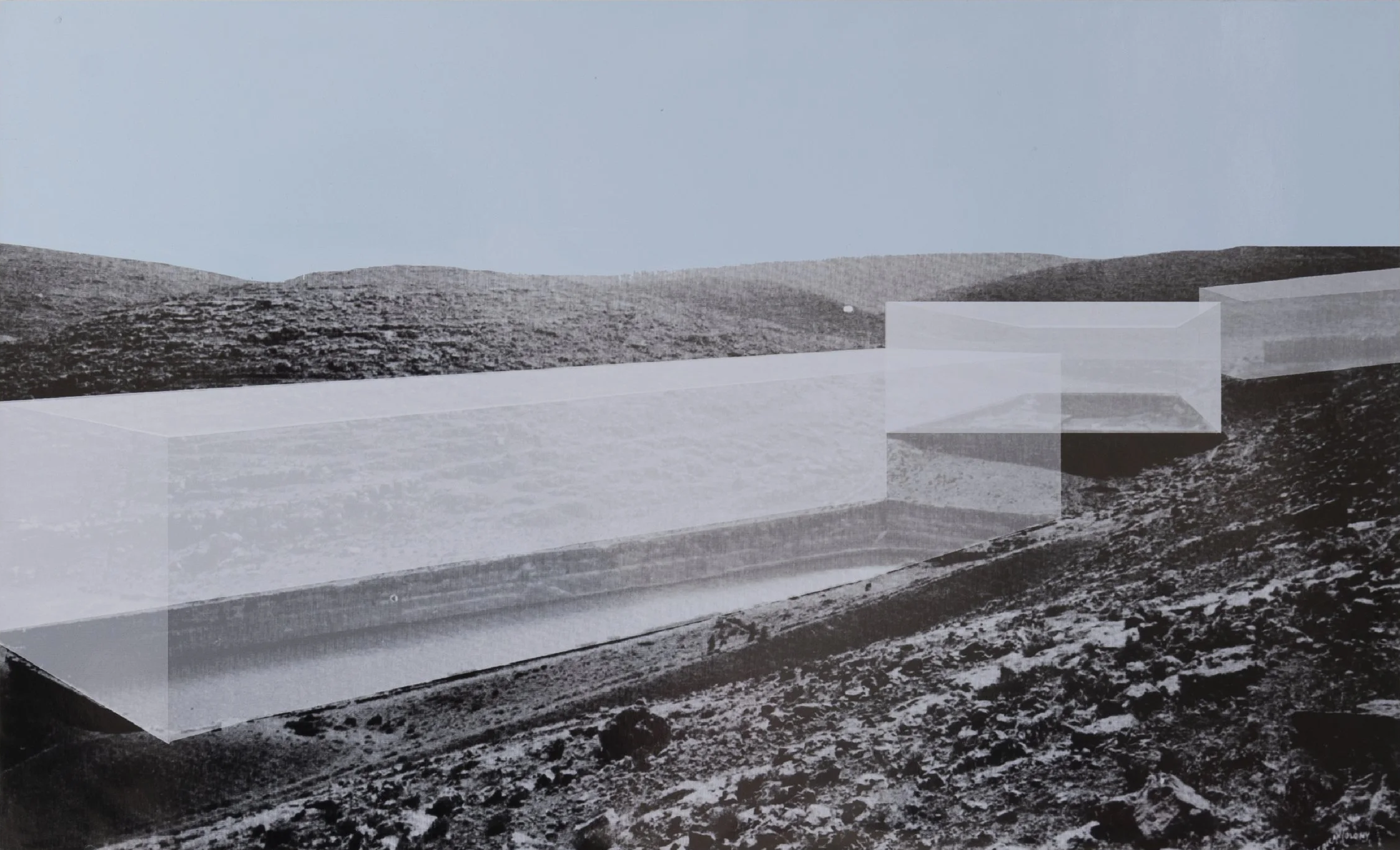
Solomon’s Pools by Dima Srouji.
Colonialism is a kind of fragmentation, a violence that seeks to splinter space, delimit people, and govern futures. As a project of anti-colonialism, this publication is therefore concerned with policies and poetics of ‘respatialization’.[1] It honors material acts of insurgence against controls and barriers by asking contributors to re-write the spatial relations of injustice that characterize climate-changed colonial modernity.
insurgent earth begins not with global models or ‘Anthropocene’ scales, then, but with siege – that ancient spatial template to organize the annihilation of some for the enrichment of others. By this definition climate catastrophe itself is the globalization of colonial siege ecologies.
This is to recognize that the long siege of Gaza is not a state of exception to liberal democracy but a constitutive feature of its world-imperial system. Lethal enclosures are a doctrinal constant in imperialisms past and present: refugee camps and ‘reservations’, black sites and biological dead zones, detention centers and urbicidal demolitions are but a few forms in a vast architecture of elimination that is actively, industrially – and academically – maintained by Euro/settler complicities to kettle and destroy racialized groups.
‘The logic of Abu Ghraib turns out to be the logic of the West,’ said Palestinian surgeon Ghassan Abu Sitta. For what was hidden in dungeons, Gaza brought into the open.
But enclosures also contain that which threatens empire most: the revolutionary potential for caregiving and collectivization – within, against, and beyond confinement. ‘Reserves’ are also reservoirs of resilience and community, sites of durable Indigenous governance and what Nour Nahhas describes as ‘small-scale sovereignty’ in the case of Lebanon’s many ‘Dahiehs’.
insurgent earth begins from this ‘spatial tension’[2]between confinement and collectivization, a structural weakness in the architecture of empire.
Follow colonial lines of force far enough, this publication suggests, and formidable solidarities are likely to emerge alongside tangled complicities.
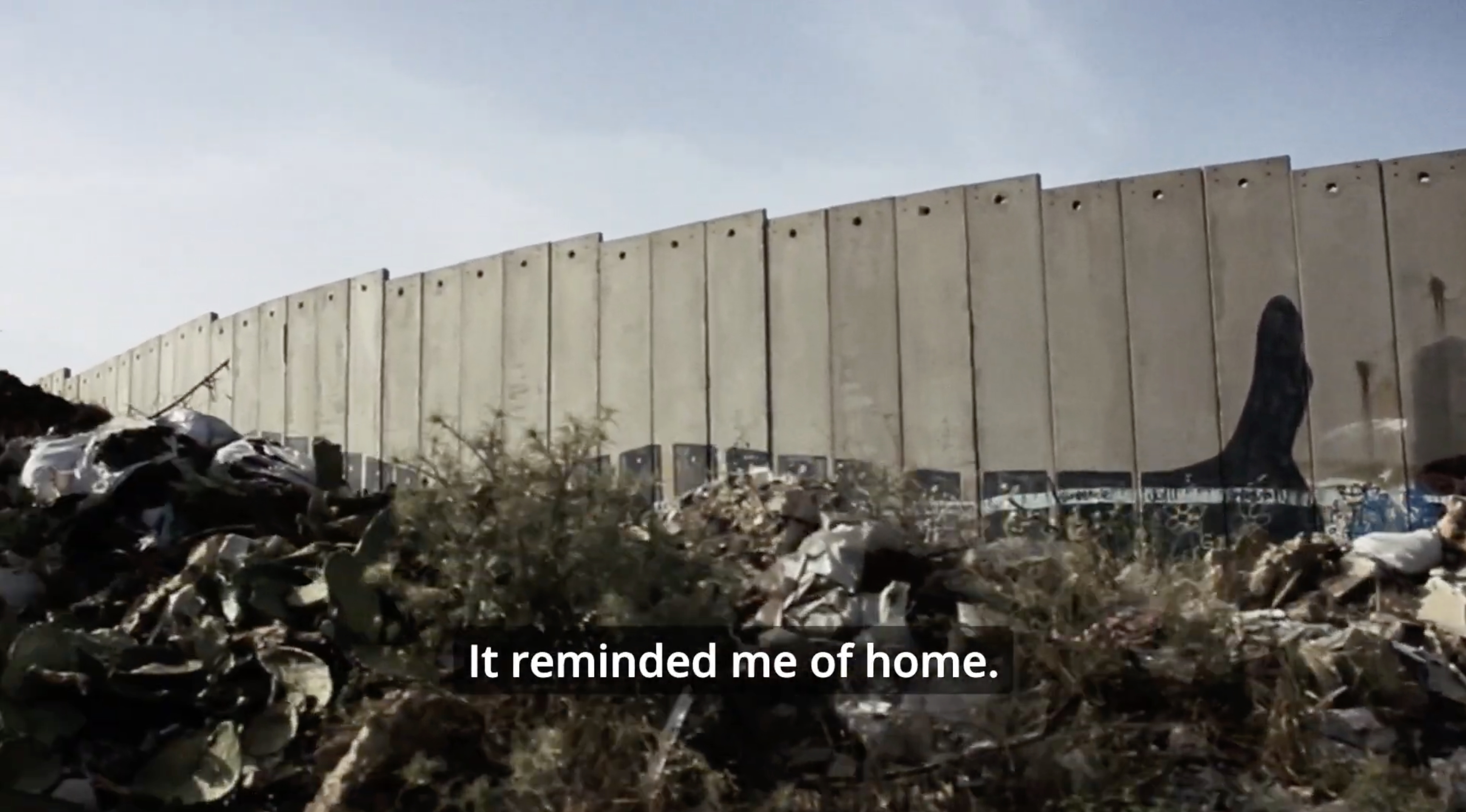
‘It reminded me of home’, says Mohawk activist Clifton Ariwakehte Nicholas in his new film Red Road to Palestine, discussed in this publication. The line is dubbed over a shot of the apartheid wall in Bethlehem, a wall built to contain and isolate people, not connect them.
*
Sweep the river
Among other things, respatializing means making legible common forms of colonial violence in uncommon places. It means undoing enclosure precisely by making new commons.
From this perspective, Dima Srouji’s ‘Solomon’s Pools’ (see the header) is a prism through which to understand settler-colonial space in particular. Great aqueous blocks raised from ancient pools figure as reservoirs of collective memory: memories of the site’s restoration in the hands of local Palestinian stewards, memories of place that offend the invader. For the same reason, they may also signal the extractive cubism of a site targeted for Zionist capture amid the systematic theft and deprivation of Palestinian water resources.
Hold the prism of Palestine up to other lands and analogous forms appear:
In the Dawnland of the Wabanaki Confederacy, 1767, colonial gridwork creeps up the banks of the Penobscot River (Penawahpskewi) and into land of the Penobscot Nation that bears its name. An English fort placed at the river’s mouth in 1759 announced siege upon a riverine system of Native power and sovereignty. Surveyors drew and redrew the bounds of ‘Indian Lands’ in an infinite regress of land confiscation. By parceling the hunting grounds that gave life to the group, the theft of Penobscot territory enacted structural genocide.
Colonial gridwork creeping up the banks of the Penobscot River toward Indian Island (alenape meneha, top-right), the governing seat of the Penobscot Nation. By Joseph Chadwick Surveyor, 1767, Maine State Archives.
By the time this map was drawn, settler massacres had already provided strategic escalation, codified by the colonial entity – the Massachusetts Bay Province – in bounties paid for the scalps of murdered Penobscot men, women, and children. Indigenous resistance, in turn, was meant to license the full force of the colonial military in ‘defense’ of white settlements.
‘I will send a number of Men on all sides of the River’, declared provincial governor Thomas Pownall in 1759, ‘sweep it from one end to the other, and hunt ye all out’. What appears a reponse to frontier violence was in fact escalation by design, a design to ‘make the land English’ in Pownall’s words.
The point is not merely to excavate a historical precursor to the present ethnic cleansing of Palestinians from Palestine but to show how struggles endure in parallel. The project of Penobscot enclosure – to sweep the river – is still ongoing, set against the Indigenous nation’s robust program of homeland legal defense, environmental stewardship, and public history.
Lawfare extended siege by other means. The state of Massachusetts and, after 1820, the state of Maine progressively confined the Penobscot Nation to a string of islands in the main stem of the river, breaking with previous agreements. Arguably, the confinement – the islanding – of the Penobscot Nation was a prototype for the U.S. ‘reservation’ system as a whole, designed to enforce dependency and isolation unto the threshold of erasure.[3]
Erasure was (and is) the doctrine outlined by Massachusetts attorney general James Sullivan in 1795: that the Dawnland’s Indigenous people either be ‘incorporated’ or ‘by degrees extirpated, and finally cease to exist as a nation’.[4]
This is not a colonial legacy. It is colonial law. The split tense (was/is) attached to erasure reflects the fact that settler-colonial invasion is an enduring structure, not a singular event.
‘Extirpation’ – literally rooting out – remains a legal agenda for the state of Maine, which for two centuries has eroded Penobscot sovereignty ‘by degrees’ down to the ultimate act of islanding: a 2012 memorandum by the attorney general’s office asserting that the Penobscot Nation has no jurisdiction over the waters in which they reside, the waters that constitute a river people as such. In fact, Maine is the only U.S. state that claims control over federally recognized tribes.
Down St. bridge to Indian Island from the west bank of the Penobscot River. Photo by the author, August 2026.
Crossing the bridge to Indian Island (alenape meneha), the seat of Penobscot governance, there are no checkpoints or militarized barriers, at least not visible ones; there is no equivalence to Palestine and the fracturing of its people across dozens of refugee camps, severely deprived of access to clean water and other essential resources. And yet Penobscot waters are dammed for settler power grids and polluted by upstream paper mills, its people engaged in an active struggle for sustenance fishing rights. In Palestine, similarly, Zionist colonialism consists in the sabotage of critical water lines and wells and the bombing of desalination plants.
The violence visited on Indigenous communities by enclosure and environmental warfare takes many forms. But the basic spatial templates are patterned across time and space, across Penboscot and Palestinian lands and waters, and across colonized worlds carved as Frantz Fanon wrote into ‘compartments’.
What, then, can it mean to see in the islanding of the Penobscot people something of the ‘archipelago of open-air prisons’ that is Palestine under foreign occupation?[6] How, this publication asks, can analysis be mobilized for the breaking – and re-making – of siege worlds?
*
Containers and collectivisms
These are not original questions. But by centering them, insurgent earth offers a forum for ideas from splintered space, a commons for that which colonialist institutions and genres seek to separate and contain.
It’s been said that the ‘Indian treaty’ is the archetypal American literature[6], a ‘fictionalized’ account, one Penobscot tribal citizen told me, to substantiate land theft. In turn, resistance literatures[7], including Penobscot literature, expose the grammar of colonial space:
Skillfully they place us – reservations can save us All lines of bullshit fed through commodities Split community was made to keep white harmony Harming me starving me of course this was robbery[8]
Nick Bear, ‘Treaty of 2010’
Bear’s ‘Treaty’ is a Penobscot re-writing of ‘Indian law’ and an inversion of the process by which white settlers dispossessed the people of the Dawnland (Waponahkik): ‘…you’re no longer welcome to our grounds / Which means the removal of all life that don’t come from something brown’. The ‘Treaty’, in fact, recognizes settler society as one whose foundation is fragmentation, whose harmony consists in harming others. In doing so, it suggests the threat of alliance, Wabanaki and otherwise, the threat of spatial repair among ‘split communities’.
FISHNETS ARE A COLLECTIVISM DIRT IS A COLLECTIVISM.[9]
Fargo Nissim Tbakhi, ‘PALESTINE IS A FUTURISM’
Among other things, this means that oil pipelines and ‘green’ energy infrastructures severing Sioux and Sami lands, or militarized earthworks dissecting the Gaza Strip and Syria’s Quneitra and Daraa, can be traced to their intersecting points of analysis and solidarity, as much as the islanding of the Penobscot Nation mirrors the ‘archipelagic’ occupation of Palestine.
Against the backdrop of Solomon’s Pools, Dima Srouji’s ‘Land Back’ poster invokes an Indigenous American movement of anti-colonialism and environmental justice. From Aya Mousawi, Love is Resistance (Saqi, 2025).
What this means in practice is not subject to editorial prescription, apart from the publication’s basic aspiration to platform critical insights and nourish new collectivisms. insurgent earth is, by definition, uncontained. And that is perhaps the whole point:
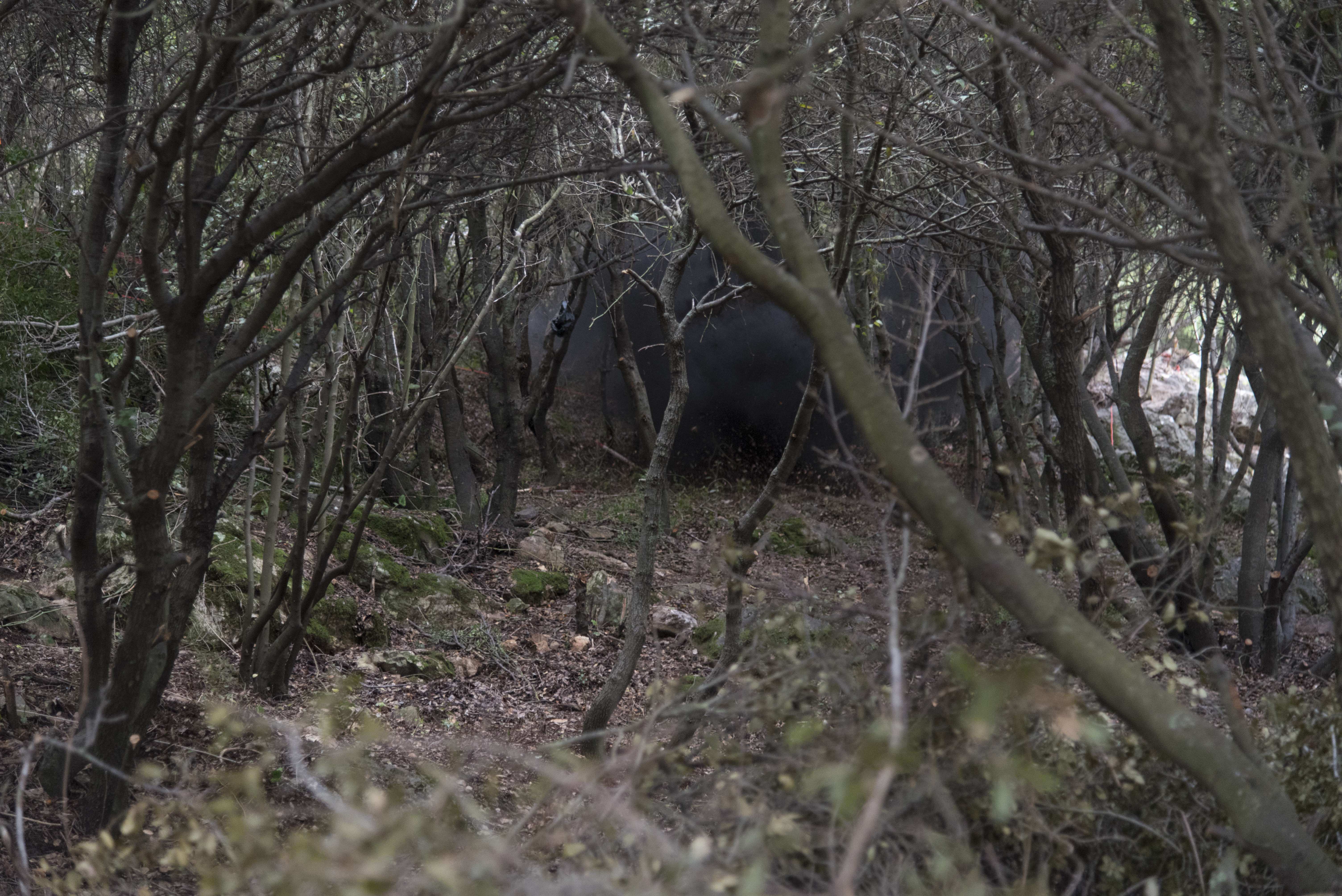
As Jasmin Lilian Diab writes of South Lebanon in this issue, ‘an insurgent earth’ is not an earth that evades harm altogether but one ‘whose meanings cannot be fully contained by the violence directed against it’.
In the Amazon, colonialism figures also as epistemic containment. Disrupting supply chains of colonial knowledge, Raphael Uchôa insists on the ‘insurgent possibility’ of theory from the South to force ‘conceptual friction’ with the North.
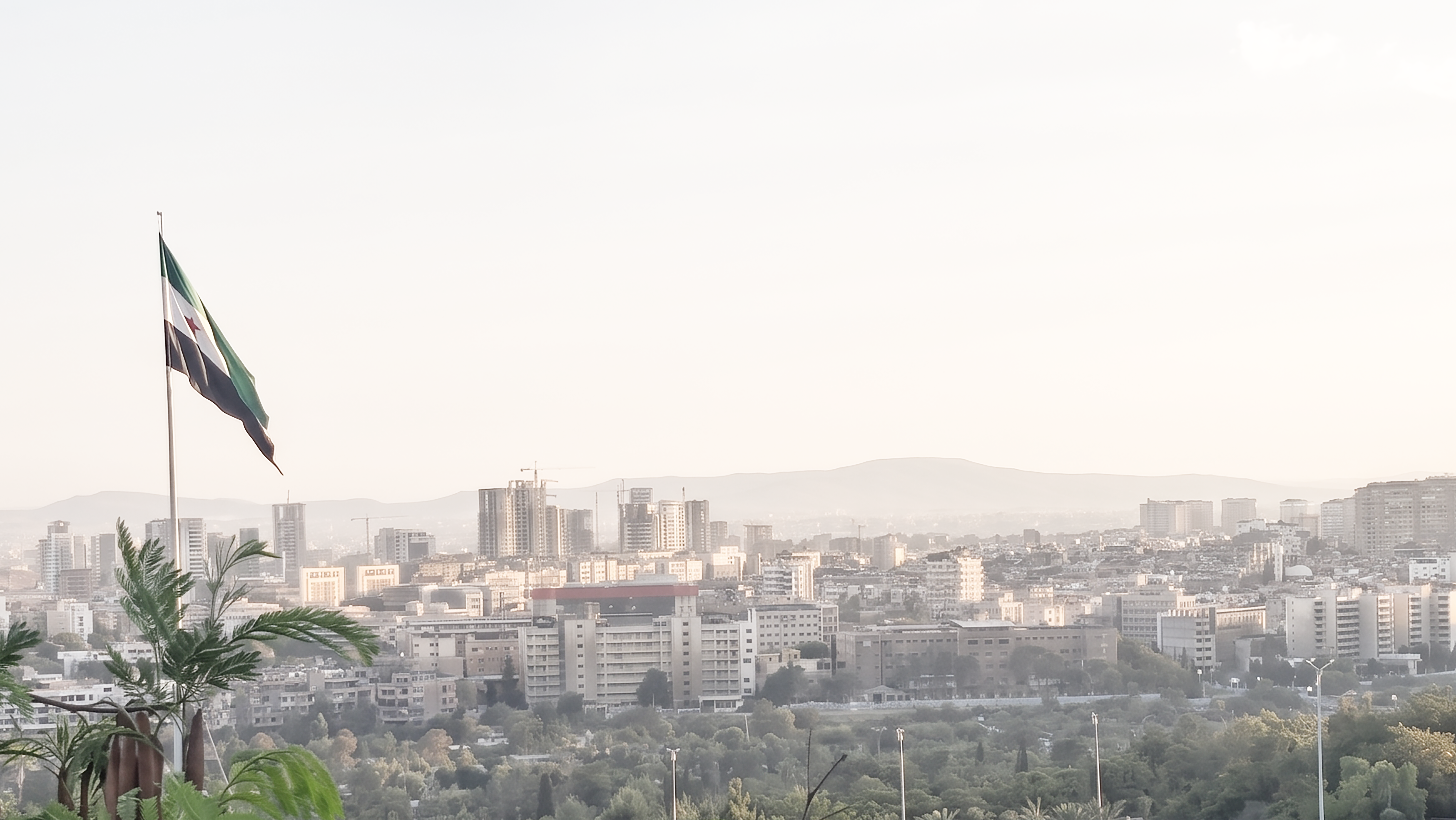
In Jana Ahmad’s analysis of Syrian reconstruction, containment is a kind shadow-architecture: it is the maintanance of inequality in luxury high-rises, top-down planning, and speculative urbanization. Even in ‘post-conflict’ space, violence is still taking place.
Yet Ahmad’s ‘living lab’ approach also re-frames containment – and by extension the dahieh, camp, enclave, and ‘reservation’ – as the scene of adaptation in the face of deprivation, sovereignty where none is given. Siege worlds are places where force, architecture, and ecology converge in a design of deprivation – a design writ large in the global climate catastrophe. But the same places also show how life endures ‘after the last sky’, among people who were not supposed to survive a century or more of settler invasion and yet who continue to map return and steward the land, from Palestine to the Penobscot and back.
Patrick Anthony is an interdisciplinary researcher of colonialism, extractivism, and ecological violence and is the founding editor of insurgent earth. Patrick is the author Unearthed: Science and Environment Across Mineral Frontiers (The University of Chicago Press, 2026) and currently serves on the editorial board of Rethinking Governance with CEU Press and Amsterdam University Press. He also writes on topics of genocide, environment, and media in Palestine and South Lebanon.
[1] Jasbir K. Puar and Dima Srouji in conversation with Zeina Maasri and Hanan Toukan, ‘Revolutionary Enclosures (Until the Apricots)’, Journal of Visual Culture 22, no. 3 (2024): 29.
[3] On New England prototypes for the U.S. reservation system in the North American West, see Yasu Kawashima, ‘Legal Origins of the Indian Reservation in Colonial Massachusetts’, The American Journal of Legal History 13, no. 1 (1969): 42–56. On the global exportation of the federal reservation model, see Mahmood Mamdani, Neither Settler Nor Native: The Making and Unmaking of Permanent Minorities (Cambridge, MA: Harvard University Press, 2020), 25-26.
[4] James Sullivan, The History of the District of Maine (Boston: I. Thomas and E. T. Andrews, 1795), 139. Sullivan served as attorney general from 1790 to 1807, when he became governor of Massachusetts. It is worth noting that early national policies of Native enclosure and ‘extirpation’ continued a colonial war against Native power, as Penobscots and other Wabanakis had exercised considerable power over land rights into the 1760s. For an excellent study in the period see Ian Saxine, Properties of Empire: Indians, Colonists, and Land Speculators on the New England Frontier (New York: New York University Press, 2019), esp. 5-6, 193.
[5] Rashid Khalidi, Palestinian Identity: The Construction of Modern National Consciousness (New York: Columbia University Press, 1997), xxv. On colonialism’s ‘compartments’, see Frantz Fanon, The Wretched of the Earth, trans. Constance Farrington (London: Penguin, 2001), 29.
[6] Eric Cheyfitz, The Colonial Construction of Indian Country: Native American Literatures & Federal Indian Law (Minneapolis and London: University of Minnesota Press, 2023), 5, 139-40.
[7] Edward Said, ‘Yeats and Decolonization’, in Nationalism, Colonialism, and Literature, ed. Terry Eagleton (Minneapolis, MN: University of Minnesota Press, 1990), 69–95.
[8] Nick Bear, ‘Treaty of 2010’, in Dawnland Voices: An Anthology of Indigenous Writing from New England, ed. Siobhan Senier (Lincoln and London: University of Nebraska Press, 2014), 266-67.